
TL;DR: If you're facing issues with API imports, start by clicking "Check Now" on your API job. If problems persist, delete the job and create a new one with a fresh API key (don't reuse an old one) following the guidelines on the specific importer page. Always double-check that your API keys are accurate, correctly permissioned, and that CoinTracking's IP address is whitelisted if the exchange requires it. Some APIs may be slow, incomplete, or temporarily restricted by the exchange itself.
How to Restart or Reset a Problematic API
The first step in addressing API issues is to kickstart the API. You can do this by heading to your API job and clicking on "Check Now".
If the issue remains after checking the job, delete the existing job and create a new one:
- Go to the API job
- Click on "Edit"
- Then click "Delete"
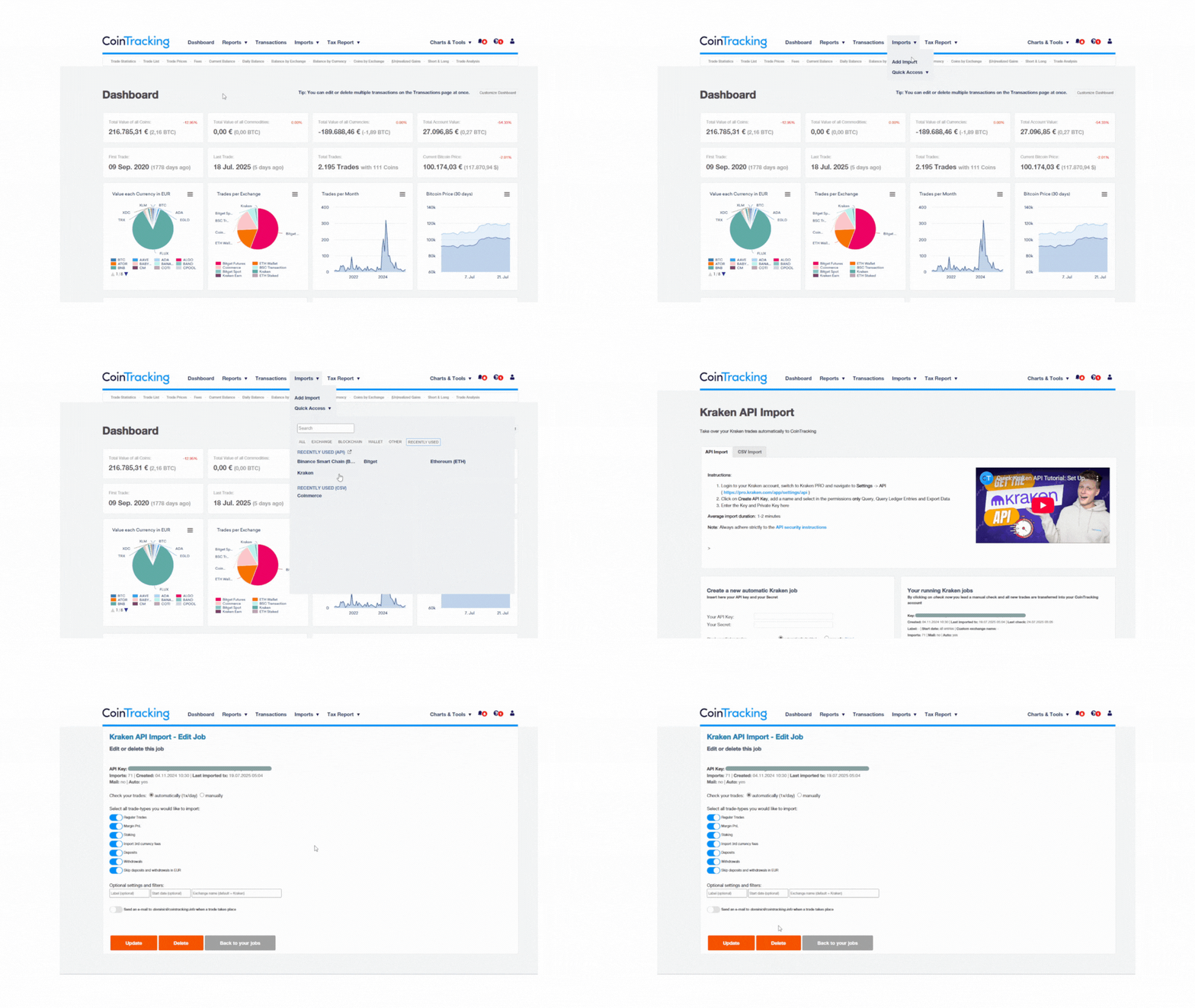
Now, recreate the API connection by following the exact steps provided on the importer page. Make sure to:
- Copy/paste API keys without spaces before or after
- Ensure keys are copied accurately
- Enable all necessary permissions on the exchange website
- Generate a brand-new API key rather than reusing the previous one. Old keys can become invalid or stop working correctly over time
Important: Only create API keys for CoinTracking. Reusing the same keys across services can cause conflicts.
If you're unsure whether your existing key has expired or been revoked, check the notifications list in your CoinTracking account. It often shows alerts about invalid or expired API keys that need to be recreated.
Do I Need to Whitelist an IP Address for My API Key?
Some exchanges require you to whitelist an IP address when creating an API key, otherwise the connection will fail or data won't sync.
- Go to your API job in CoinTracking and note the IP address displayed there.
- Enter this exact IP address in the whitelist field when creating (or editing) the API key on the exchange's website.
- This applies, for example, to Bitvavo: when setting up the Bitvavo API import, you must add the IP address shown in your CoinTracking account to the API key's IP whitelist on Bitvavo before the import will work.
If you skip this step, the exchange may block the connection entirely, even if the API key itself has the correct permissions.
Watch for Warnings and Import Timing
- Check for warning messages on the API import page. These often reveal the cause of missing data.
- Some APIs take time to complete imports (e.g., Binance can take up to 24 hours).
Common Issues and Fixes
- Missing transactions: Check the API Live Data page to confirm if data is being synced.
- Partial data: Some APIs do not transmit all data types (e.g., staking, income). This must be manually entered.
- Corrupted setup: Recreating the API job (with a new key) often resolves temporary problems or permission mismatches.
- Exchange-specific limitations: Some APIs only support certain trade types. For example, the Pionex API only supports Spot trades. Futures and Grid Bot trades are not transmitted via the API and need to be added manually or via CSV, if supported.
Not all exchanges provide complete information. If you are still missing data after a full import, check the "Supported Import Types" section on the right side of each API importer page.
Exchange-Specific Setup Guides
Some exchanges have their own dedicated step-by-step instructions for creating (and deleting) API jobs, since the process can differ slightly from the general steps above:
- MEXC: Follow the dedicated MEXC import guide for the exact steps to create and delete an API job for this exchange.
- Bitvavo: Follow the dedicated Bitvavo import guide, and remember to whitelist your CoinTracking IP address as described above.
Known Exchange-Side Issues
- Bitget: There have been known cases of the Bitget API failing to import data correctly following a platform-side update on the exchange's end. If your Bitget API suddenly stops working after previously functioning normally, this may be related to a change on Bitget's side rather than your CoinTracking setup. Recreating the API job with a fresh key is the recommended first step.
CSV Imports and Raw Exchange Files
- The for-cointracking.csv file (where offered by an exchange) is intended to be the complete transaction export. If data is missing from this file, this is a limitation on the exchange's side. Contact the exchange's support directly to request the missing data.
- Raw or detailed exchange export files (i.e., not the standard CoinTracking-formatted CSV) cannot be imported directly. These require either the Excel import template or the Custom Importer to map the columns correctly before the data can be added to your account.
Final Notes
- API reliability depends on the exchange, not all outages or delays are under CoinTracking's control.
- If persistent issues remain, try switching to a CSV import or manually entering the data.
For continued problems, please contact CoinTracking Support with details about the issue and your API job setup.