
TL;DR
If your portfolio shows spam or fake tokens, you can remove them and prevent future re-imports using the Blockchain Importer start date or the Spam Center. Always verify tokens using a block explorer and back up your data before making changes.
1) What are unwanted transactions and how do they occur?
When importing data via API or Blockchain Import, tokens may appear that you never traded. These are usually spam or fake tokens airdropped to your wallet and may distort your portfolio with false values.
Because API and blockchain jobs update daily (if automatic import is enabled), simply deleting these tokens won't prevent them from being re-imported.
To permanently remove them, you can:
Set an import start date to ignore older transactions
Use the Spam Center to block future imports
2) How can I identify spam tokens?
To investigate a suspicious token:
Go to the Transactions page and enable the Advanced Table View.

Locate the transaction hash of the suspected entry.
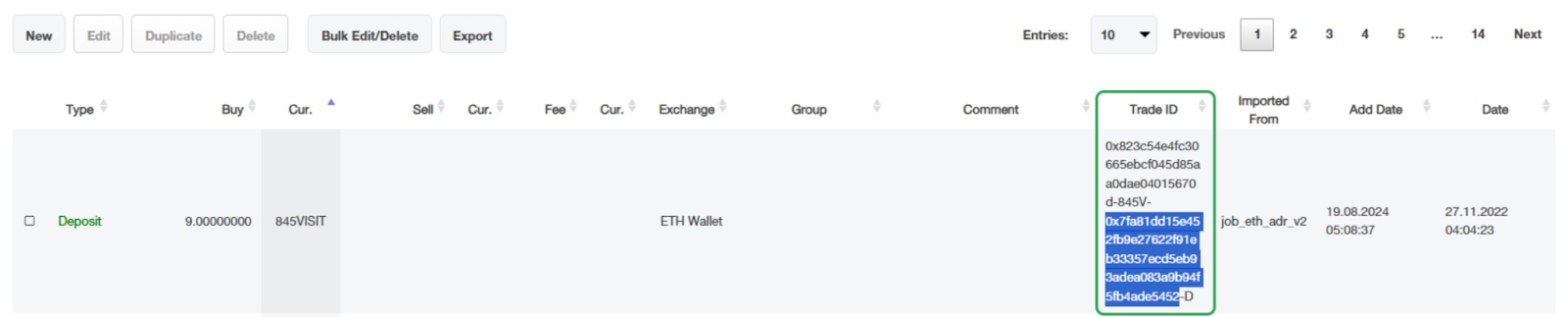
Paste the hash into the relevant blockchain explorer (e.g., Etherscan).
Look for warnings or tags such as "Fake" or "Phishing".
Alternatively, paste your wallet address into the explorer and review recent tokens.
Use the explorer's spam filter options if available.
3) How do I delete spam transactions and prevent future re-imports?
Part A: Prevent future imports
Go to your Wallet Import Settings.
Click Edit next to the relevant wallet or blockchain job.
Under "Optional settings and filters", set a Start Date (e.g., 01.01.2023).
Save the changes.
This blocks all earlier transactions from re-importing.
Part B: Delete existing spam transactions
Go to Transactions.
Use filters to find unwanted tokens (e.g., by name or wallet).
Tick the checkboxes next to those transactions.
Click Delete and confirm.
Tips:
Always create a backup first: Backup Guide
Use Shift or Ctrl keys to bulk-select transactions
If tokens reappear, check all related API/blockchain jobs and ensure they use correct start dates
4) How do I use the Spam Center?
The Spam Center lets you permanently block specific tokens from re-importing.
Supported blockchains:
ADA, AETH, ALGO, ATOM, AVAX, BNB, BSC, CRO, DOT, ELGD, ETH, LINEA, FTM, LUNA, SOL
Use it to:
View flagged spam
Mark tokens as spam manually
Block future imports of selected tokens
Read more in our Spam Center FAQ
5) How do I delete spam transactions by import date?
If spam transactions were re-imported after setting a start date:
Go to Transactions > Bulk Delete
Choose the relevant wallet/exchange
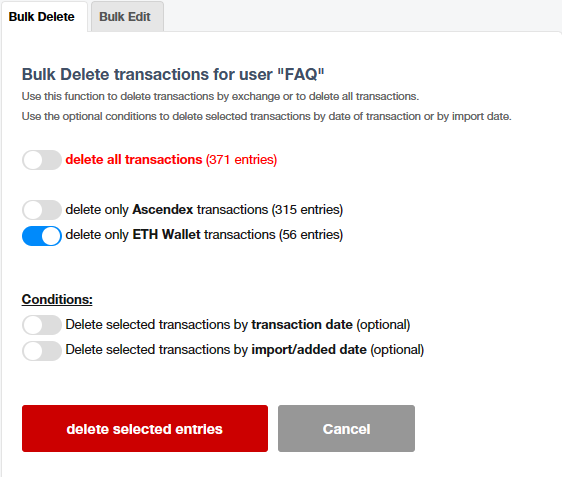
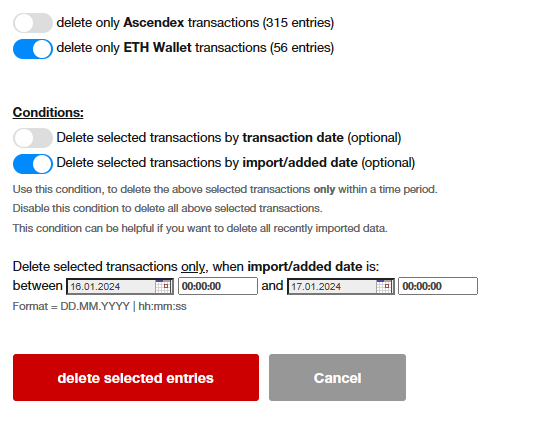
Click "Delete selected transactions by import/added date (optional)"
Select the timeframe of the spam transactions
Alternative:
Enable the Extended Table View
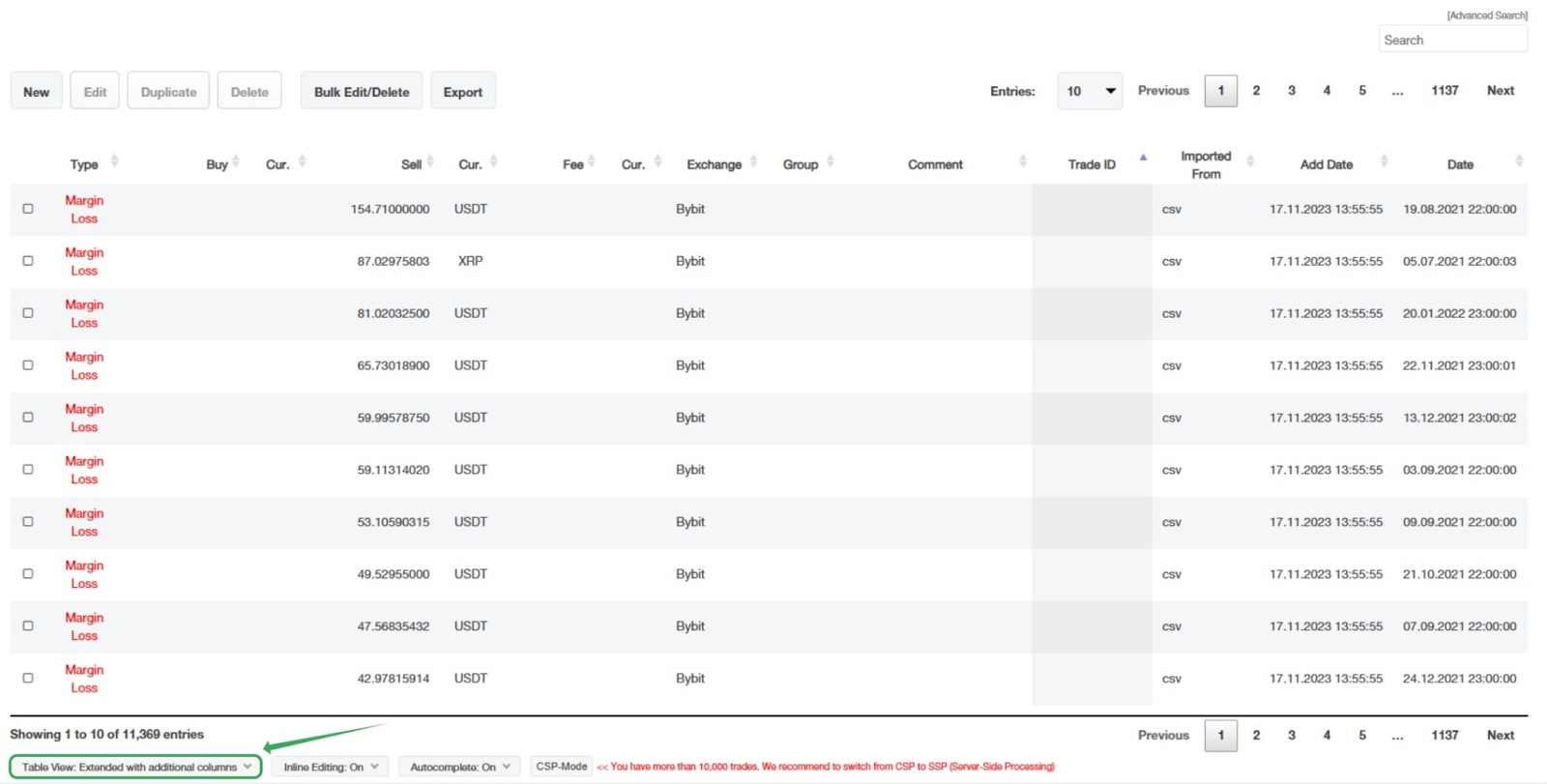
Sort by Add Date
Delete recently imported entries manually
Use a combination of start dates, manual deletions, and the Spam Center to ensure your portfolio remains accurate and free of unwanted tokens.